Identity
IGF-1 LR3 at a glance
- Intended use
- In-vitro laboratory research only
- Regulatory status
- Not approved as a medicine — not for human or veterinary use
Research use onlySupplied for in-vitro laboratory research. Not for human or veterinary use.
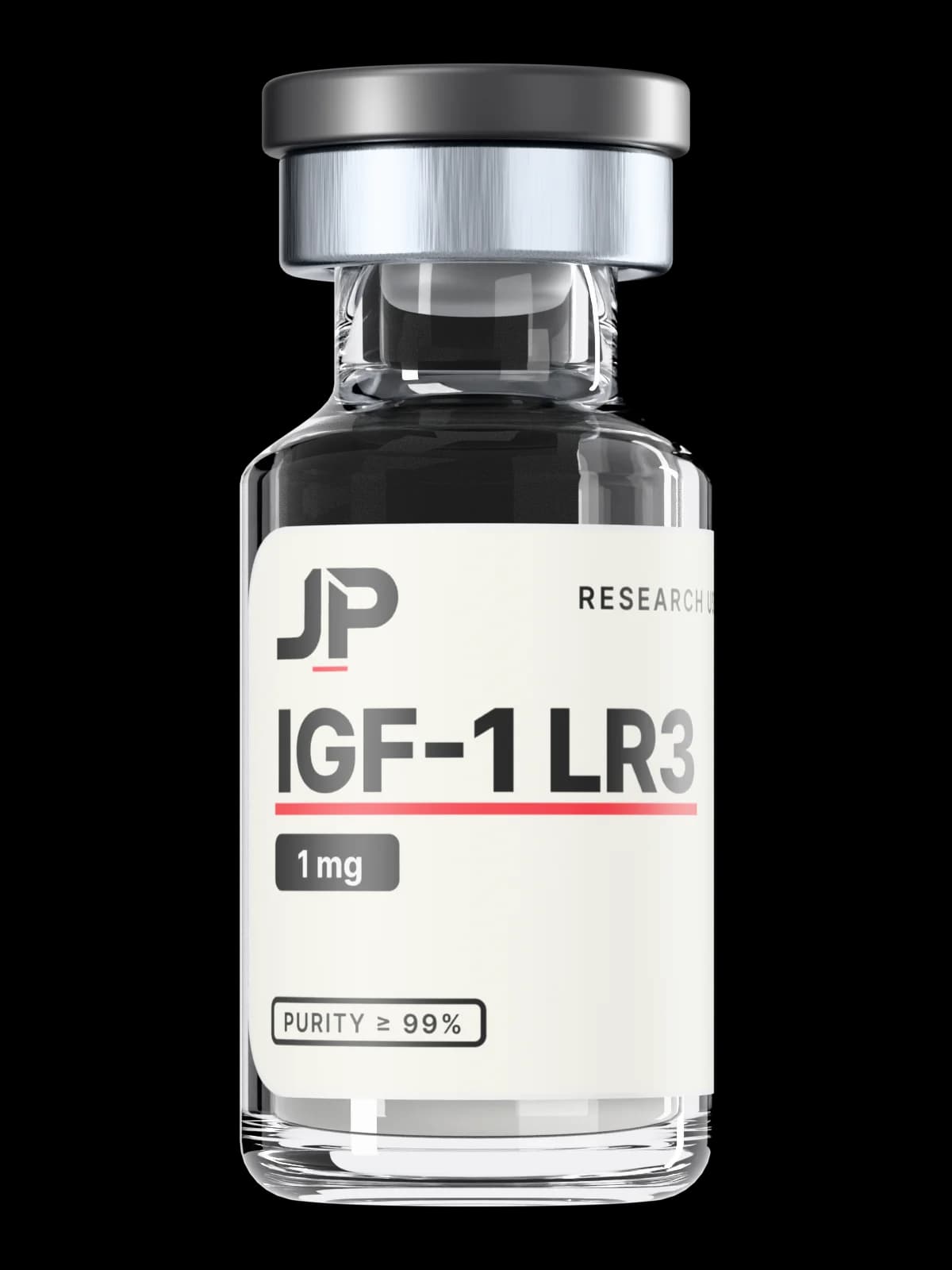
GROWTH FACTORS
Long-acting insulin-like growth factor analogue for cell-proliferation and muscle-cell research.
Compound reference
Identity
Research notes
IGF-1 LR3 (Long R3 IGF-I) is an 83-amino-acid analogue of insulin-like growth factor 1 with an arginine substitution at position 3 and a 13-residue N-terminal extension. Research has demonstrated that these changes sharply reduce binding to IGF-binding proteins, extending its activity and making it a potent stimulator of proliferation in cultured myoblasts and other cell lines. Each vial is lyophilised under nitrogen, HPLC-verified at ≥99% purity, and its batch Certificate of Analysis is viewable online.
Research calculation only, not dosing guidance. U-100 = 100 graduations per mL.
Common questions
IGF-1 LR3 is supplied India-wide by JP Peptides for laboratory research use. Every batch is tested by an independent analytical laboratory before it is listed.
IGF-1 LR3 is listed at ₹9,999 for the 1 mg vial. Live pricing and stock are shown on this page.
No. IGF-1 LR3 is supplied strictly as a research chemical for laboratory use. It is not a medicine, it is not approved for human or veterinary use in India or elsewhere, and it must not be administered to humans or animals. Purchase is limited to qualified researchers and institutions.
Vials are supplied lyophilised and shipped India-wide. Store the sealed lyophilised vial refrigerated and protected from light, and handle it according to your own laboratory's written protocols for research materials.
For laboratory research only. Not approved as a medicine, and not for human or veterinary use. Papers cited on this page are listed for reference, not as claims about this product.
Placing an order confirms you are a qualified researcher working under your own laboratory’s protocols and Indian law. Research use policy →